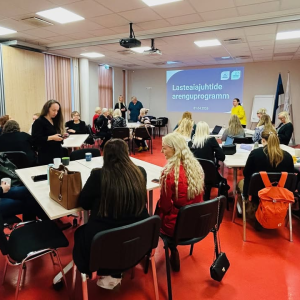
The student conference “OUR CHANGING WORLD 2026” will be held at Saku Gymnasium, Teaduse St 1 on 6 March 2025.
As part of the World Days programme, we invite students to reflect on hope for the future – a value that supports resilience in a complex world and helps them explore how anxiety and uncertainty can be turned into purposeful action.
This year’s theme is: "HOPE THAT MOVES".
Our world is changing rapidly — shaped by climate change, growing inequalities, and the way our cities and communities develop. The conference invites students to explore these challenges through the lens of hope and purposeful action.
This time we will focus on the Sustainable Development Goals: SDG 10 (Reduced Inequalities), SDG 11 (Sustainable Cities and Communities) and SDG 13 (Climate Action).
Suggested Subtopics:
1. Young People Making a Difference: Climate Action in Practice
Real examples of youth-led climate initiatives at local, national, or global level
Focus on what was done, why it worked, and what obstacles were faced
Reflection on how young people influence policy, communities, or behaviour
2. Cities for Everyone: Reducing Inequality in Urban Life
How cities can become more inclusive and fair for different social groups
Examples related to housing, transport, or access to public services
Comparison between cities that succeed and those that struggle with inequality
3. Climate Change and Inequality: Who Is Affected Most?
How climate impacts are unevenly distributed between countries and communities
Case studies showing links between poverty, geography, and climate risk
Discussion of responsibility and fairness in global climate action
4. Greener Cities, Healthier People
The role of green spaces, clean air, and sustainable urban planning
Connections between environmental quality, mental health, and social well-being
Examples of city projects that improve both climate resilience and quality of life
5. Fair Access to Clean Energy: Success Stories
How renewable energy projects reduce emissions and social inequality
Examples from schools, communities, or developing regions
Analysis of barriers to clean energy and how they have been overcome
6. Sustainable Transport: Moving Cities Forward
Public transport, cycling, and walking as climate-friendly solutions
Social benefits such as affordability, accessibility, and reduced pollution
Evaluation of how transport choices shape urban inequality
7. Affordable and Sustainable Housing: Solutions That Work
Innovative housing projects that reduce environmental impact and costs
Links between housing, energy efficiency, and social justice
Discussion of long-term sustainability versus short-term economic pressures
8. Communities Responding to Climate Challenges
How local communities respond to floods, heatwaves, or other climate-related risks
Examples of cooperation, resilience, and grassroots initiatives
Reflection on the role of trust, leadership, and shared responsibility
9. Reducing Waste, Building Fairer Cities
Urban waste reduction, recycling, and circular economy initiatives
How waste management affects different social groups
Examples of cities or communities that have successfully reduced waste
10. Small Actions, Big Impact: Local Projects with Global Goals
Community, school, or youth-led projects linked to the SDGs
Evaluation of impact: how small-scale actions contribute to systemic change
Reflection on hope, agency, and turning concern into purposeful action
All proposed topics align with the three Sustainable Development Goals outlined above.
The conference is intended for 10th- and 11th-grade students. Participants are expected to deliver a 4–5-minute presentation on a topic related to the conference theme. Students should use an online presentation tool to support their presentation.
As part of the selection process, students are required to submit an audio recording of the introductory section of their presentation. The audio file should be sent to taivi.oigus@saku.edu.ee no later than 27 February and must include the following information:
topic title
student’s name and e-mail address
name of the school
teacher’s name
short introduction
Ten students will be selected to participate in the conference. The final list of presenters will be announced on 2 March. Selected students must submit their completed presentations by 4 March at the latest.